
Dementia Care at Home in Cambridge
Familiar rooms, familiar faces and a routine that stays steady, even when memory does not.
For someone living with dementia, home is more than a preference. Known surroundings reduce confusion and anxiety in a way no new environment can. Our carers work with what is still there, the habits, the stories and the things that bring comfort, rather than correcting what has gone.
 CQC regulated provider
What Dementia Care at Home Means
Dementia care at home is support shaped around the person rather than the diagnosis. Two people with the same condition rarely need the same things, and what helps in spring may not help by autumn.
In practice it means keeping the day predictable, protecting dignity, noticing early when something is wrong, and staying calm when a moment becomes difficult. Much of the skill is in what a carer does not do: not arguing, not testing, not rushing.
When Families Usually Contact Us
- Shortly after a diagnosis, when nobody is sure what happens next
- When meals are being skipped or medication missed
- When a person is safe in the day but unsettled in the evening
- After a fall, a hospital stay or a wandering incident
- When a spouse or adult child is exhausted from managing alone
- When family live away from Cambridge and worry between visits
How Our Carers Support Daily Life
Routine and orientation
Keeping the shape of the day familiar, offering gentle reminders about time and place, and reducing the decisions a person has to make.
Personal care with dignity
Washing, dressing and continence support offered patiently, explained step by step, never forced when the answer is no.
Meals and hydration
Preparing familiar food, eating alongside the person where that helps, and quietly monitoring appetite and fluid intake.
Medication support
Prompting or assisting with medication where assessed and permitted, and reporting missed doses or changes promptly.
Safety at home
Watching for practical risks such as the hob, the front door and night time trips to the bathroom, and raising anything that needs a professional assessment.
Activity and connection
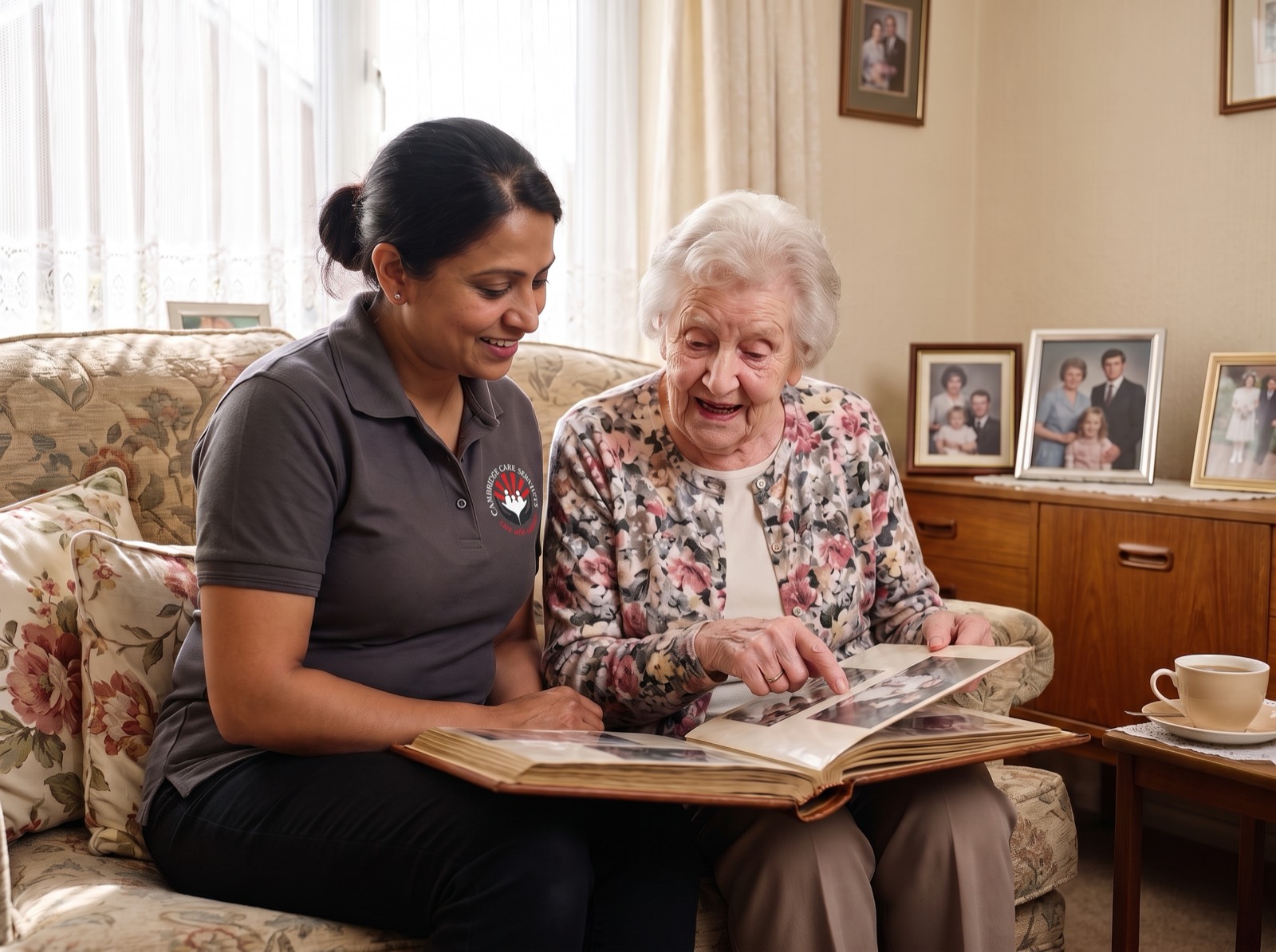
Music, photographs, gardening, familiar programmes, safe walks and conversation about the past, which is often easier than conversation about today.
When a Moment Becomes Difficult
Agitation, repetition, refusal and distress are not deliberate. They are usually communication: pain, tiredness, needing the toilet, too much noise or not recognising the person in front of them.
Our carers look for the cause rather than manage the behaviour. That means stepping back, changing the subject, lowering the noise, trying again in ten minutes, and never correcting for the sake of being right. Where distress becomes frequent, we record it and raise it with the family and the GP or memory service.
How We Arrange Dementia Care
- 1
Talk to our care team
An honest conversation about what is happening now and what worries you most.
- 2
Free home assessment
We visit, meet the person in their own surroundings, and build a picture of routine, history, preferences and risks.
- 3
A care plan built on life history
Names, jobs, hobbies, music, the tea preference. These details make a carer effective.
- 4
Carer matching and a gentle introduction
We introduce the carer alongside a familiar person wherever possible, so the first visit is not a stranger at the door.
- 5
Reviews as things change
We review regularly, adjust support and involve the GP or memory service when needed.
Why Families Choose Us for Dementia Care
Continuity above all. A small regular team, because new faces undo weeks of progress.
Dementia trained carers. Training in communication, orientation, distress and person centred approaches.
Life history at the centre. We record what matters to the person, not just what they need help with.
Honest reporting. You hear what actually happened, including the hard days.
Carers from across Europe, Africa and Asia. We match on shared language and temperament where we can.
Care that grows. Visits, night support and live in care from one local team.
Common Questions About Dementia Care
You May Also Be Considering
You Do Not Have to Work This Out Alone
Most families call before they are certain what they need, and that is exactly the right time. Call our care team, or send a few details and we will call you back.
- 15 Deal Grove, Sawston, Cambridge, Cambridgeshire CB22 3DR
- 07917 611 425
- info@cambridgecareservices.co.uk
- Monday to Friday 09:30 to 21:00Saturday 10:00 to 15:00An out of hours service is available in an emergency.
Ask about dementia care
We will call you back during our opening hours.